Google
 

Friday, February 16, 2024

Economic Forecast Analysis for Australia's Automotive Industry

In our endeavor to formulate our annual budget, we are meticulously gathering economic data pertinent to Australia's automotive industry. This entails scrutinizing key indicators such as GDP growth, international trade dynamics, and trends in car sales to inform our budget projections effectively within the Australian automotive market.

  1. GDP Growth Rate: Australia's GDP growth rate is pivotal for gauging the country's economic trajectory and its implications for the automotive sector. By examining historical GDP growth rates, we can anticipate economic shifts that may influence consumer spending patterns and overall demand for cars. A robust GDP growth rate may signify increased consumer confidence and purchasing power, thus impacting our budget allocations for production, marketing, and expansion efforts within the Australian automotive market.


  2. International Trade Volume: Australia's participation in international trade significantly influences our budget forecasts for the automotive industry, particularly regarding car imports and exports. Monitoring trade volumes of cars enables us to assess market dynamics, identify potential trade barriers, and adjust our budget strategies accordingly. Fluctuations in trade volumes may affect import tariffs, supply chain costs, and the overall competitiveness of cars in the Australian market.


  3. Car Sales Trends: Analyzing car sales trends in the Australian market is essential for aligning our budget with consumer demand and market trends. By tracking sales data, we can identify emerging preferences, anticipate shifts in consumer behavior (e.g., growing demand for electric vehicles), and allocate resources effectively. Understanding sales trends enables us to tailor our budget strategies to capitalize on growth opportunities and enhance our market presence in Australia's automotive industry.

Explanation of Graphs:

GDP Growth Rate Graph: This graph illustrates Australia's historical GDP growth rates over the past five years, providing insights into the country's economic performance and its potential impact on consumer behavior and car sales trends.

  1. https://www.researchgate.net/figure/Australia-GDP-growth_fig1_318529289


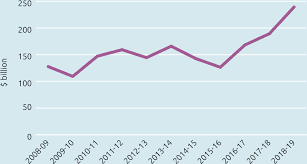
International Trade Volume Chart: This chart showcases Australia's international trade volumes of cars, offering valuable insights into the country's trade dynamics in the automotive sector. Understanding trade volume trends enables us to assess market demand, identify opportunities for growth, and adjust our budget strategies accordingly.
  1. https://www.dfat.gov.au/publications/trade-and-investment/trade-and-investment-glance-2020


  2. Car Sales Trends Graph: This graph presents sales trends for cars in the Australian market, allowing us to identify patterns and shifts in consumer preferences. By analyzing sales data, we can make informed decisions about inventory management, marketing initiatives, and budget allocation strategies to enhance our competitiveness in Australia's automotive industry.


https://www.dinggo.com.au/blog/car-sales-figures-and-statistics-in-australia

Agile and Waterfall project methodologies


The project management landscape is diverse, with various methodologies available to guide teams in delivering successful outcomes. Two prominent methodologies, Agile and Waterfall, stand out as distinct approaches with different philosophies and practices. Understanding the main differences between these two methodologies is essential for project managers and teams to choose the most suitable approach for their projects.

Waterfall, often considered the traditional or classical approach, follows a sequential, linear process where each phase of the project flows downward like a waterfall. The project progresses through distinct phases, including requirements gathering, design, development, testing, deployment, and maintenance. Once a phase is complete, the project moves on to the next phase, and there is little room for iteration or changes once work has begun. Waterfall is characterized by its structured and predefined nature, with extensive planning done upfront to define requirements and scope before any development work begins. This methodology is suitable for projects with clear and stable requirements, where the end product can be precisely defined from the outset.

In contrast, Agile is an iterative and incremental approach that prioritizes flexibility, adaptability, and collaboration. Agile breaks down the project into smaller, manageable iterations called sprints, typically lasting 2-4 weeks. Each sprint focuses on delivering a potentially shippable product increment, with cross-functional teams working collaboratively to achieve the sprint goal. Unlike Waterfall, Agile allows for continuous feedback, adaptation, and changes throughout the project lifecycle. This iterative approach enables teams to respond quickly to customer needs, market changes, and emerging requirements, leading to faster delivery of value.

One of the key distinctions between Agile and Waterfall lies in their approach to planning and execution. Waterfall relies on extensive upfront planning and documentation, with each phase completed sequentially before moving to the next. This approach is well-suited for projects with stable requirements and predictable outcomes, where changes are costly and disruptive. In contrast, Agile embraces change and uncertainty, prioritizing delivering value early and often. Agile teams focus on working closely with stakeholders, responding to feedback, and continuously improving the product based on changing priorities and market dynamics.

Another significant difference is in the level of customer involvement and collaboration. Waterfall typically involves less customer interaction during the development process, with requirements being defined upfront and changes managed through formal change control processes. In contrast, Agile encourages active involvement of customers and stakeholders throughout the project, with regular opportunities for feedback and validation. This customer-centric approach ensures that the product meets customer needs and expectations, leading to higher satisfaction and value delivery.

Overall, while Waterfall and Agile represent different approaches to project management, each has its strengths and weaknesses depending on the nature of the project and its requirements. Waterfall is suited for projects with stable, well-defined requirements, while Agile is ideal for projects where flexibility, speed, and continuous improvement are paramount. Understanding these differences enables project managers and teams to select the most appropriate methodology and adapt their approach to achieve project success.

Friday, January 26, 2024

Importance of Soft Skill in Workplace


  1. Excellent Communication Skills:

    • Clear Expression of Ideas: Effective communication is paramount for conveying ideas clearly, ensuring that team members comprehend objectives, tasks, and expectations. This clarity minimizes misunderstandings and enhances productivity.

    • Collaboration and Team Dynamics: Strong communication fosters collaboration among team members, leading to improved problem-solving, innovation, and overall team dynamics. It creates a positive and open work environment.

  2. Strong Interpersonal Skills:

    • Positive Workplace Relationships: Interpersonal skills are essential for building positive relationships with colleagues, clients, and stakeholders. A harmonious workplace, characterized by trust and cooperation, contributes to higher morale and job satisfaction.

    • Conflict Resolution: Effective interpersonal skills enable individuals to navigate conflicts diplomatically, leading to quicker resolutions and maintaining a healthy work atmosphere.

  3. Ability to Work Independently and Prioritize Tasks:

    • Operational Efficiency: Independence in work and task prioritization is crucial for operational efficiency. Employees who can manage their workload independently contribute to smoother workflow and project timelines.

    • Strategic Goal Achievement: The ability to prioritize tasks aligns with organizational goals, ensuring that critical objectives are addressed first. This strategic approach enhances the overall effectiveness of the team and the organization.

Collectively, these skills not only contribute to individual success but also play a pivotal role in creating a collaborative, positive, and efficient work environment, which is essential for achieving organizational objectives.

Friday, January 19, 2024

Samsung Galaxy S23 FE Marketing Strategies:


Creating Product Awareness:

Samsung utilizes diverse strategies to generate awareness for the Galaxy S23 FE. Through extensive advertising campaigns on TV, online platforms, and print media, the company ensures widespread visibility. The brand leverages a robust social media presence to showcase product features, reviews, and user experiences. Additionally, strategic partnerships with retailers lead to visually appealing in-store displays, creating a strong impact and attracting potential customers.
 

Encouraging Product Trial:
To encourage consumers to try the Galaxy S23 FE, Samsung employs various tactics. In-store product demonstrations provide a hands-on experience, allowing potential buyers to explore the device before making a purchase. Offering trial periods and satisfaction guarantees helps alleviate consumer concerns and fosters confidence. Collaborations with influencers and online reviews contribute to building credibility, influencing followers to consider trying the product.
 
Providing Product Information:
Samsung ensures consumers have access to comprehensive information about the Galaxy S23 FE. A detailed and user-friendly product website serves as a central hub for specifications, features, and user guides. The company invests in robust customer support services, including live chat, helplines, and forums, to address queries and provide additional information. User manuals and guides included with the product contribute to educating customers about its functionalities.


Customer Retention Strategies:
Samsung focuses on retaining customers through effective strategies. Exclusive loyalty programs offer perks and rewards, fostering a sense of loyalty among repeat buyers. Personalized communication, such as newsletters and special offers, enhances the connection with existing customers. The brand's commitment to efficient after-sales support ensures a positive post-purchase experience, contributing to long-term customer loyalty.
 
Encouraging Repeat Purchases:
To entice customers to buy more and use the product frequently, Samsung implements targeted strategies. Promotional bundles, offering discounts on accessories or related products with the Galaxy S23 FE, incentivize additional purchases. The brand introduces exclusive upgrade options for existing users, encouraging them to stay within the Samsung ecosystem. Regular software updates and new features keep customers engaged and invested in the product over time.
 
Identifying More Customers through Promotions:
Samsung employs promotional tactics to identify and attract new customers. Limited-time offers create a sense of urgency, prompting potential buyers to take advantage of exclusive deals. Referral programs incentivize existing customers to bring in new ones, expanding the customer base. Collaborations and partnerships with other brands or industries for joint promotions introduce the Galaxy S23 FE to new audiences, increasing its market reach.


Friday, December 8, 2023

Breaking the Chains of Discrimination - A Personal Journey


Discrimination can manifest in various forms, creating challenges that individuals must confront. In this blog post, I'll share a personal experience of encountering discrimination in the workplace, addressing the incident, emotions, coping mechanisms, and reflections on personal growth.


1. Description of the Incident: During my tenure at SCCM, I encountered a subtle yet impactful form of discrimination based on age. Despite contributing actively to team projects, I noticed a pattern where my ideas were occasionally dismissed or overshadowed during meetings. It became evident that my younger age was influencing perceptions of my competence.

2. Emotions at the Time: Experiencing discrimination triggered a range of emotions - frustration, self-doubt, and even anger. The workplace, meant to be a collaborative environment, felt isolating and unfair. It was disheartening to witness my contributions being undervalued due to an aspect beyond my control.

3. Coping Mechanisms: Instead of internalizing the negativity, I decided to address the issue directly. I scheduled a meeting with my supervisor to discuss my concerns, providing examples of instances where I felt my ideas were not given due consideration. This open dialogue allowed for a constructive conversation about fostering an inclusive and respectful work culture.

4. Reflections and Personal Growth: In hindsight, addressing the issue head-on was a crucial step. It not only brought awareness to the subtle biases in the workplace but also prompted positive changes in team dynamics. If faced with a similar situation again, I would emphasize proactive communication and education, encouraging a more inclusive mindset among colleagues.

Conclusion: Encountering discrimination is a challenging aspect of life, but confronting it can lead to positive transformations. By sharing experiences and fostering open conversations, we contribute to creating workplaces that value diversity and treat every individual with the respect they deserve.

Crafting Stunning Infographics with Canva: A Step-by-Step Guide


Introduction:

Welcome to our comprehensive guide on creating eye-catching infographics using Canva. Infographics are powerful visual tools that can effectively convey information. In this step-by-step tutorial, we'll walk you through the process of designing an infographic on Canva and seamlessly integrating it into your blog. Let's get started!

Step 1: Set Up Your Canva Account

  • Navigate to Canva and sign up for a free account.
  • Explore the user-friendly interface and familiarize yourself with the design tools.

Step 2: Choose Your Infographic Dimensions

  • Click on "Create a design" and select "Custom Dimensions."
  • Input the dimensions suitable for your infographic or choose from Canva's preset options.

Step 3: Design Your Infographic

  • Access Canva's extensive library of templates or start from scratch.
  • Customize your infographic by adding text, icons, images, and shapes.
  • Experiment with colors, fonts, and layouts to match your blog's aesthetic.

Step 4: Incorporate Data and Visuals

  • If your infographic includes data, use Canva's charts and graphs tools.
  • Upload relevant visuals and resize them to fit your design.

Step 5: Save and Export

  • Once satisfied with your design, click "Download" and select your preferred file format (PNG or JPEG).

Step 6: Insert Your Infographic into Your Blog

  • Log in to your blog platform and create a new blog post.
  • Add a relevant title and introduction to your post.
  • Insert your infographic by uploading the saved file.

Step 7: Optimize for SEO

  • Describe your infographic using alt text to improve search engine optimization.
  • Include a brief caption or context to guide readers.

Step 8: Preview and Publish

  • Preview your blog post to ensure the infographic displays correctly.
  • Hit the publish button to share your visually appealing and informative content with your audience.

Conclusion:

Congratulations! You've successfully created and integrated an engaging infographic into your blog using Canva. Experiment with various designs and styles to enhance your content and captivate your readers. Happy designing!


SA